CT Creator Technologies
Bristol · Content infrastructure since 2017

Content at scale is an engineering problem.

Most media teams do not have a creative bottleneck. They have a throughput bottleneck: footage that has to be ingested by hand, versions that have to be exported one at a time, and an asset library that only one person can navigate. We build the infrastructure that removes those steps entirely.

Open tooling · Your cloud tenancy · Source code handed over

pipeline / live● operational
ingest_throughput412 clips / hr
transcode_targets9 formats
manual_steps0
median_delivery11 min
asset_library418,220 items
regioneu-west-2 (London)
The diagnosis

The expensive part is never the camera.

A mid-sized UK media team we audited last year was producing 180 finished assets a month with six people. Four of those six spent most of their week on work no human should be doing: renaming files, exporting the same edit at five ratios, uploading to four destinations and answering the question "where is the final version of that?"

None of it is difficult. All of it is expensive, repetitive and error-prone, and it scales linearly with output — which means every new channel you add costs another fraction of a person.

We replace those steps with infrastructure. Not a platform you rent from us, but a pipeline built in your own cloud account, using open tools, documented in your own repositories, that you could operate without us tomorrow.

  • Built inside your cloud tenancy, in a UK or EEA region
  • Open tooling only — FFmpeg, S3-compatible storage, standard queues
  • Infrastructure as code, in your repositories, from day one
  • No per-seat licences, no proprietary formats, no exit fee
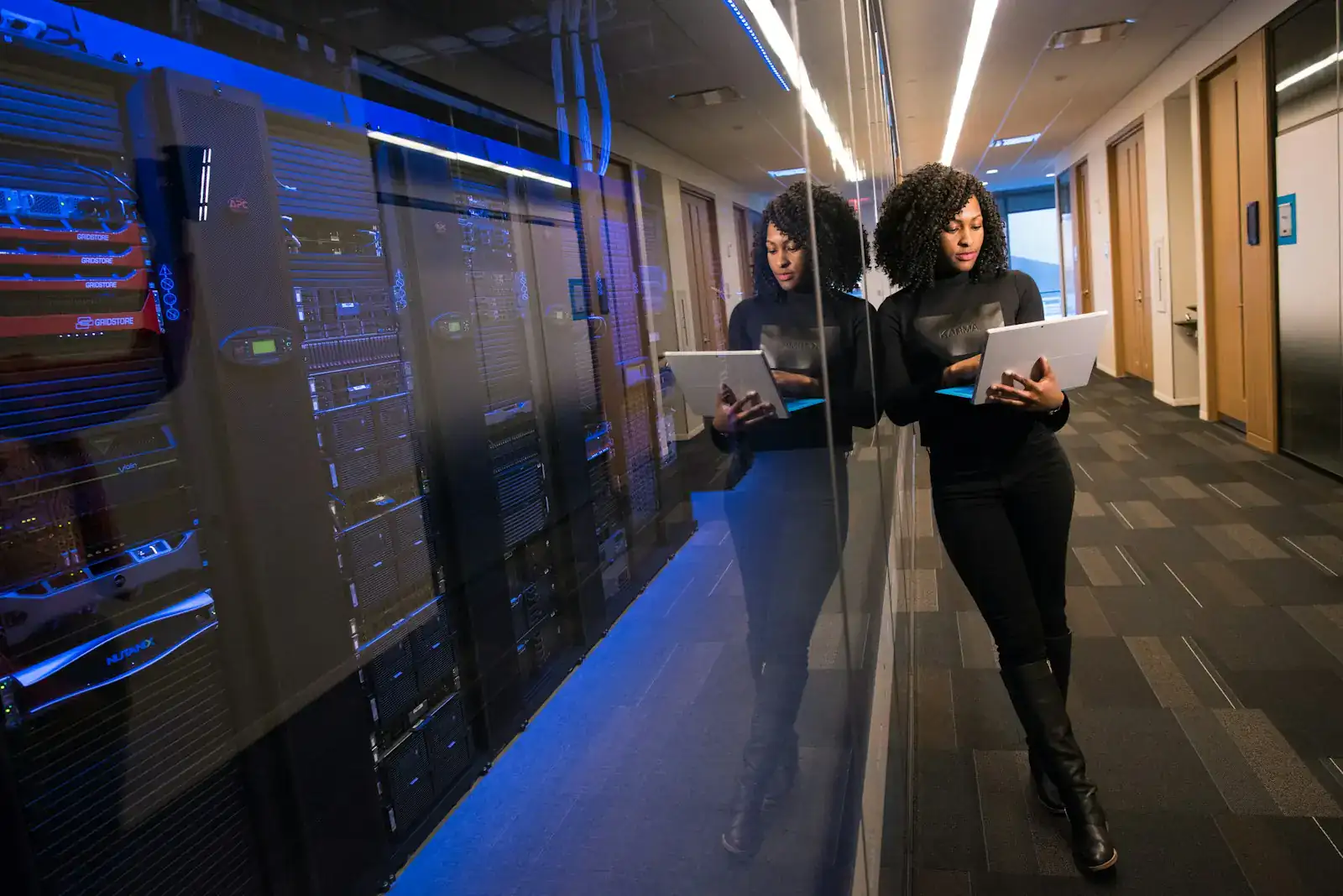
Operator monitoring a wall of illuminated data screens Operations floor — Bristol
System modules

Six modules. Deploy the ones you need.

Every engagement is assembled from the same six components. Most clients start with two and add the rest over eighteen months as the volume justifies it.

MOD_01

Ingest & normalisation

Watch folders, camera card automation and API endpoints that accept media from anywhere and normalise it into a single predictable structure before a human sees it.

  • Watch folder & card ingest
  • Checksum verification
  • Proxy generation
  • Automatic naming schema
MOD_02

Transcode & delivery

A queue-driven transcode farm producing every format, ratio and bitrate you publish in, from one source master, with no manual export step at all.

  • Parallel FFmpeg workers
  • 9+ output profiles
  • Burned-in caption variants
  • Direct publish to destinations
MOD_03

Asset management

A searchable library with real metadata — not a shared drive with hopeful folder names. Anyone in the business can find the right file in seconds.

  • Full-text transcript search
  • Structured taxonomy
  • Version lineage
  • Access control by team
MOD_04

Metadata & enrichment

Automatic transcription, speaker labelling, shot detection and tagging applied at ingest, so search works on what is inside the file rather than its name.

  • en-GB transcription
  • Speaker diarisation
  • Shot & scene detection
  • Custom tag models
MOD_05

Rights & compliance

Licence windows, talent releases, music clearances and territory restrictions tracked against every asset, with alerts before anything expires.

  • Licence expiry alerts
  • Talent release register
  • Territory restrictions
  • Audit trail export
MOD_06

Archive & retention

Tiered storage that moves cold material to cheap archive automatically and enforces your retention policy without anyone having to remember it.

  • Automatic tiering
  • Retention policy engine
  • Restore on request
  • Cost reporting per project
Reference pipeline

What a running system looks like.

STAGE_01

Capture

Media arrives from cameras, phones, contributors or partner APIs. Nothing is renamed by hand.

STAGE_02

Normalise

Checksums verified, proxies built, naming schema applied, metadata written to the catalogue.

STAGE_03

Enrich

Transcription, shot detection and tagging run automatically. Editors search text, not filenames.

STAGE_04

Produce

Editors work on proxies in the tools they already know. One master is approved.

STAGE_05

Deliver

Every format, ratio and destination generated and published from that single master, in minutes.

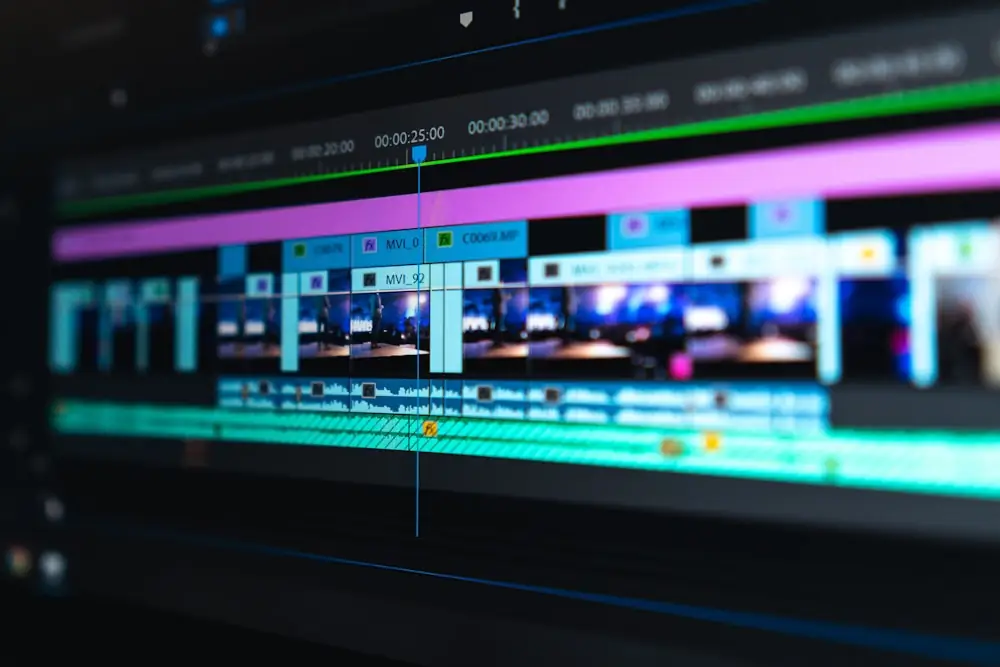
Colour grading timeline on a wide editing monitorGrade suite

Editors keep their tools

The single fastest way to fail at this is to ask an experienced editor to change how they cut. Our pipelines sit either side of the edit, not inside it. Premiere, Resolve, Final Cut and Avid all work unchanged — the difference is that the media is already there, already labelled, and the exports happen without anyone pressing a button.

The same principle applies upstream. Producers keep their spreadsheets, journalists keep their CMS, and the marketing team keeps its scheduling tool. We integrate; we do not migrate.

0Manual steps removed
0Median master to publish
0Average storage cost saved
0Weeks to first live pipeline
Technical detail

For the people who will ask.

Every engagement starts with a written architecture document. The table opposite is the default position — all of it is negotiable, none of it is proprietary, and your security team gets it before you sign anything.

We hold Cyber Essentials Plus certification, carry professional indemnity cover, and will complete your supplier security questionnaire without complaining about it.

  • Infrastructure as code, reviewed in your repositories
  • No client media stored on our own systems, ever
  • Least-privilege IAM, all access logged and auditable
  • Disaster recovery tested quarterly, results shared
Default architecture
ComponentDefault
CloudYour AWS, Azure or GCP tenancy
Regioneu-west-2 (London) or eu-west-1
Object storageS3 or S3-compatible, versioned
TranscodeFFmpeg on autoscaling workers
QueueingSQS / Service Bus / Pub-Sub
CataloguePostgreSQL + OpenSearch
TranscriptionSelf-hosted Whisper, en-GB tuned
IaCTerraform, your repository
MonitoringPrometheus + Grafana, or your stack
EncryptionAt rest and in transit, your keys
CertificationCyber Essentials Plus
HandoverFull source and runbooks, on request
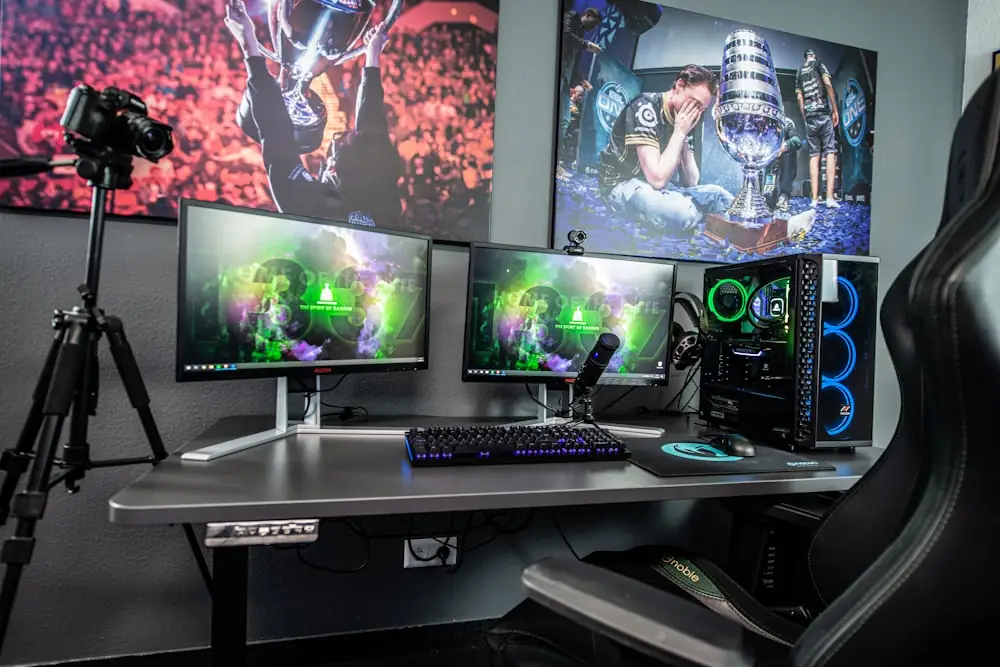
Multi-monitor video production and streaming setupDelivery test bench
Case note

A broadcaster's regional desk, rebuilt.

A regional news operation was producing 60 packages a week across four platforms. Two staff were effectively full-time exporters. Rights information lived in a spreadsheet that had not been reconciled in eight months.

We deployed ingest, transcode and rights modules over nine weeks, in their own Azure tenancy, alongside the existing workflow rather than replacing it. Once the parallel run proved clean, the manual path was switched off.

BEFORE

2 FTE on exports · 47 min median publish · rights unreconciled · 4 destinations by hand

AFTER

0 FTE on exports · 9 min median publish · rights alerting live · 11 destinations automated

Engagements

Three ways to start.

Fixed fees, excluding VAT. Cloud costs are billed by your provider directly to you and are typically £400–£2,600 per month depending on volume.

ENG_01

Pipeline Review

£6,500 fixed

  • Three weeks, two engineers
  • Full workflow audit and timing study
  • Architecture recommendation
  • Costed implementation roadmap
  • Presented to your technical team
  • Yours to implement with anyone
Book a review
ENG_02 · most common

Build & Run

£11,400 / month

  • Minimum six months
  • Two to four modules deployed
  • Dedicated engineering pod
  • 24/5 pipeline monitoring
  • Quarterly disaster recovery test
  • Documentation in your repositories
  • Handover programme available anytime
Discuss a build
ENG_03

Embedded Team

£26,000 / month

  • Minimum twelve months
  • All six modules, multi-site
  • Six-person embedded team
  • 24/7 on-call with SLA
  • Custom module development
  • Security questionnaire support
  • Named technical director
Talk to us
Client notes

What technical teams say.

"They built it in our tenancy, in Terraform, in our repos. Six months in we could genuinely run it ourselves, which is exactly what they said would happen and not what we expected."

— Head of Technology, regional broadcaster

"Our editors did not have to change a thing. That was the entire reason the project survived contact with the edit floor."

— Post Production Manager, production company, London

"The pipeline review paid for itself before implementation started — it found £31,000 a year of storage we were paying for and not using."

— Finance Director, media group, Manchester
FAQ

Questions from procurement and engineering.

Are you selling software or a service?
A service, built entirely from open tooling. There is no licence, no per-seat charge and no proprietary format anywhere in the stack. What you pay for is engineering time and operational cover — the system itself is yours from the first commit.
Where does our media actually live?
In your own cloud tenancy, in a region you choose, under keys you control. We never take custody of client media on our own infrastructure. Our engineers hold time-boxed, least-privilege access which is logged and revocable by you at any moment.
How long before something works?
A proof of concept processing your real footage runs within the first two weeks. A production pipeline handling live volume is typically live in six to eight weeks. We run it in parallel with your existing process until it has proved itself for a full cycle.
What if we want to bring it in-house?
That is the intended destination, not a failure. Everything is version-controlled in your repositories and documented as runbooks from day one. We run a structured handover — shadowing, then reverse shadowing, then a support taper — whenever you are ready.
Do you work with broadcast compliance requirements?
Yes. Ofcom retention obligations, subtitle standards, audio loudness compliance and access services are all handled as pipeline stages with their own tests, so compliance is verified automatically rather than checked by a person at the end.
What does it cost to run once built?
Cloud costs are billed directly to you by your provider — typically £400 to £2,600 per month depending on volume and how much archive you hold. Most clients see a net reduction because tiering moves cold material off expensive storage automatically.
Can you integrate with our existing MAM?
Usually. We have integrated with most of the major systems and a fair number of homegrown ones. Where an API exists we use it; where it does not, we will tell you honestly what the workaround costs before you commit.
Contact

Request a pipeline review.

Tell us roughly how much media you process and where it hurts. We will come back within one working day with an honest view on whether infrastructure would help you or whether you simply need one more editor.

contact / direct● open
studioRunway East, 1 Victoria Street
cityBristol BS1 6AA, United Kingdom
hoursMon–Fri 09:00–18:00 GMT
field_required
invalid_address
field_required

Handled under our privacy policy. Response within one working day. Mutual NDA available on request before any detail is shared.

> enquiry received · routed to engineering · response within one working day